If you've noticed a mysterious little A, I or M appearing next to seafood dishes on restaurant menus lately, it's not a Chef's rating system or a new dietary code.
From 1 July 2026, restaurants, cafés, pubs, clubs, takeaways and other hospitality venues across Australia are now legally required to tell diners where the seafood they're serve comes from. It's part of new Country of Origin Labelling (COOL) laws designed to give Australians greater transparency about the food they're ordering.
For seafood lovers, it's a small change that could make a big difference.
What is the new law?
For years, Australians have been able to see country of origin labels on seafood purchased from supermarkets, but the same wasn't true when dining out.
That has now changed.
Under the new laws, hospitality businesses must clearly identify whether the seafood in each menu item is:
A - AustralianI - Imported
M - Mixed origin (contains both Australian and imported seafood)
Restaurants can use the simple letter system or spell it out in words, provided it's easy for customers to understand.
So your menu might read:
Grilled Barramundi (A)Garlic Prawns (I)
Seafood Linguine (M)
Or it may simply state "Australian", "Imported" or "Mixed Origin" beside the dish.
Why has the law changed?
The goal is simple: give diners more information.
Many Australians assume the seafood served in local restaurants is Australian, but that's often not the case. In fact, around 64% of the seafood consumed in Australia is imported, making it difficult for consumers to know what they're eating when dining out.
The new labelling rules are intended to:
Give consumers more transparency.Help people make informed purchasing decisions.
Allow diners who want to support Australian fishers and seafood producers to do so.
Bring hospitality into line with existing retail food labelling requirements.
What do the labels actually tell you?
The new system is deliberately simple.
A = AustralianThe seafood in the dish is sourced from Australia.
Many diners choose Australian seafood because of its reputation for quality, strict food safety standards and well-managed fisheries.
I = Imported
The seafood comes from overseas. Australia imports significant quantities of prawns, squid, basa, tilapia and other seafood products from around the world. An imported label doesn't indicate lower quality. It simply tells you the product wasn't sourced in Australia.
M = Mixed Origin
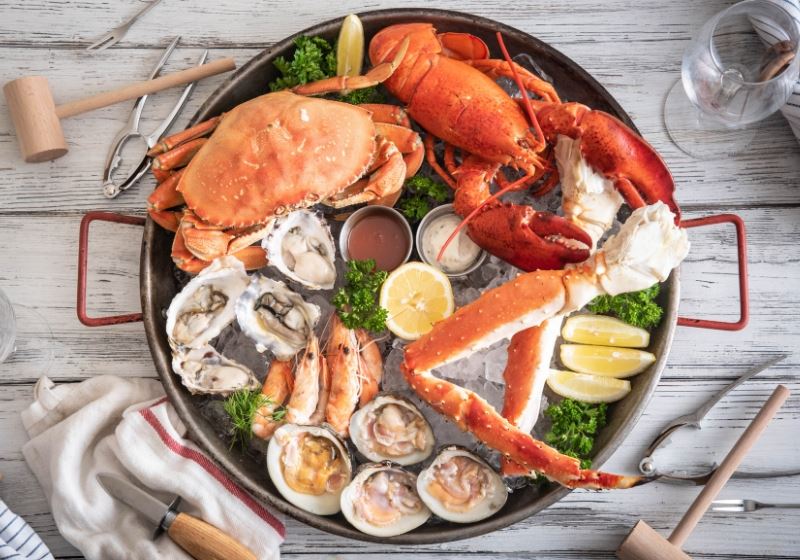
The dish contains both Australian and imported seafood. Think seafood platters, mixed seafood pasta or fried seafood baskets where different ingredients may come from different countries.
Does every seafood dish need a label?
Most dishes containing seafood sold for immediate consumption do.
The rules apply across restaurants, cafés, pubs, clubs, food trucks, takeaway shops and similar hospitality businesses.
There are a few exceptions. Foods containing only shelf-stable seafood ingredients, such as canned tuna, shrimp paste or fish stock, don't require country of origin labelling under the new standard.
How should diners use the new labels?
Think of the labels as another piece of information, much like vegetarian (V), vegan (VG) or gluten-free (GF) symbols.
If supporting Australian producers is important to you, look for the A.
If you're simply curious about where your seafood comes from, the labels provide an easy answer without needing to ask your server.
And if you're ordering a mixed seafood dish, don't be surprised to see an M. It's common for restaurants to source different seafood species from different suppliers.
A small change with a big impact
While the new labels may seem like a minor addition to menus, they're expected to improve transparency across Australia's hospitality industry.
For diners, it means making more informed choices.
For restaurants, it's an opportunity to proudly showcase Australian seafood where they're using it.
The next time you order oysters, prawns or grilled fish, take a quick look beside the menu item. Those three little letters, A, I or M, now tell a bigger story about where your meal began.